


OUR HISTORY
Building Relationships Since 1946
For over 80 years, Jones & Roth has evolved alongside the communities we serve. We’ve adapted to new technology, changing regulations, shifting industries, and new ways of working. Through every decade of change, one thing has remained constant: our commitment to helping people succeed.
The story of Jones & Roth is not simply the story of a growing accounting firm. It is the story of relationships, innovation, mentorship, and a belief that business can be a positive force in people’s lives.
1940s
The Beginning
In 1946, Bill Haggerty and Archie Ruff established a small accounting practice that would eventually become one of Oregon’s most respected independent CPA and advisory firms. Having worked together previously in the lumber industry, they shared a belief that accounting was more than balancing books and preparing tax returns. It was about helping people make sound decisions, build successful businesses, and strengthen the communities they served.
The founders built the firm around personal relationships and trusted advice. Long before advisory services became a formal offering, clients depended on their accountants for guidance on both business and personal decisions.
Those values continue to guide Jones & Roth today.
Key Timeline Events
- 1946 – Bill Haggerty starts an accounting practice in the Eugene area.
- 1946 – Archie Ruff joins six months later, forming Haggerty Ruff & Co.
1950s
Growing Alongside Oregon
Throughout the 1950s, the firm’s client base reflected Oregon’s economy. Timber, manufacturing, agriculture, and small business owners relied on trusted advisors who understood both financial records and business realities.
Growth came primarily through reputation and referrals. In an era before professional firms actively marketed themselves, success depended on delivering excellent service and building relationships that lasted for decades.
Even in the firm’s earliest years, success was measured by the strength of client relationships rather than the size of the client list. Many client relationships established during this period would continue for decades.
The groundwork was being laid for what would become a multi-generational firm.
Key Timeline Events
- Expansion of bookkeeping, tax, and accounting services throughout Oregon communities.
- Continued growth in timber-related industries and locally owned businesses.
1960s
Building Trust
While many professional firms viewed accounting as a transactional service, the future culture of Jones & Roth was already emerging. Clients sought out trusted advisors who understood not only their books, but also their families, goals, and businesses.
The 1960s were defined by steady growth and deepening client relationships. Many clients did business with the firm not just because of technical expertise, but because they trusted their advisors to guide them through important personal and business decisions.
This trust became part of the firm’s identity. Relationships were measured in decades, not transactions.
“They really cared about their clients, not just the numbers and their businesses, but also their personal lives and future plans.”
— Doug Griesel describing Bill Haggerty and Lanny Jones
Key Timeline Events
- Continued expansion of tax, accounting, and business advisory services.
- Growth fueled primarily by referrals and long-term client relationships.
1970s
A New Generation Emerges
The 1970s marked the beginning of a generational transition that would shape the next fifty years of firm history.
Future leaders including Doug Griesel, Roger Noah, Mike Lewis, and Jill Foster joined the firm and quickly became instrumental in its growth. At the same time, technology was beginning to transform the profession.
As founding leaders approached retirement, they created opportunities for the next generation. Young professionals were trusted with responsibility early in their careers, establishing a leadership development approach that still exists today.
Payrolls that had once been calculated by hand started moving onto IBM System/34 computers. Tax returns were still heavily manual, but the firm was already investing in new tools and systems to serve clients more efficiently.
Key Timeline Events
- 1974 – Doug Griesel joins the firm.
- 1974 – Jill Foster joins and begins managing payroll services.
- 1976 – Roger Noah joins Haggerty Ruff & Co.
- 1978 – Mike Lewis joins the firm.
- 1979 – Jill Foster earns her CPA license.
“We learned fast.”
— Doug Griesel reflecting on the opportunities given to a new generation of leaders.
“Lanny Jones encouraged me to go back to school and become certified.”
— Jill Foster
“Many of our smaller clients went on to become very successful businesses.”
— Roger Noah

Left: The office interior at 444 B Street. Right: Doug Griesel (left) and Roger Noah (right) outside the Springfield office of Jones, Griesel, Noah & Lewis circa 1979.
1980s
Forming Jones & Roth
The 1980s were one of the most transformative decades in firm history.
As Managing Partner, Lanny Jones helped shape the collaborative and people-centered culture that continues to define Jones & Roth today. His leadership influenced many of the future partners who would guide the firm through the next several decades.
At the same time, the firm began embracing personal computers, networking technology, and new ways of serving clients. Future leaders such as Phil Stice pushed the firm toward technology adoption long before it became common among regional firms.
As technology rapidly evolved and client needs became more sophisticated, firm leaders saw opportunities to expand beyond Springfield. Strategic growth led to a merger with David Roth and Dick Rice’s Eugene practice, creating the Jones & Roth name that remains today.
The decade also brought an important milestone for leadership diversity when Jill Foster became the firm’s first female partner.
Key Timeline Events
- 1979 – Firm becomes Jones, Griesel, Noah & Lewis.
- 1982 – Merger with Roth & Rice forms Jones & Roth.
- 1986 – Phil Stice joins and champions emerging computer technology.
- 1987 – Roger Noah moves to Hillsboro to open a new office.
- 1987 – Hillsboro office established.
- 1987-88 – First firmwide computer network implemented.
- 1988-89 – Jill Foster becomes the firm’s first female partner.

“The people at Jones & Roth impressed us as being progressive and interested in new ideas.”
— Dan Mueller
“We care about people. We really do.”
— Mike Lewis
1990s
One Firm, One Team
The 1990s transformed Jones & Roth from a collection of offices into a collaborative regional firm.
Hillsboro and Forest Grove expanded the firm’s presence in the Portland metropolitan area. Eugene and Springfield eventually combined operations, bringing people together physically and culturally. New network technology connected offices that had once operated independently.
Just as important, firm leaders encouraged the next generation to challenge assumptions and improve processes.
Rather than waiting until someone became a shareholder, Jones & Roth encouraged emerging leaders to improve systems, solve problems, and influence the direction of the firm. This culture of ownership helped shape many of today’s leaders.
Future leaders like Tricia Duncan, Robin Matthews, Jeremy Prickel and Fritz Duncan were given opportunities to help shape the firm’s direction early in their careers. Their ideas around consistency, collaboration, mentoring, and leadership development laid the groundwork for the firm we know today.
Key Timeline Events
- 1990 – Dan Mueller and Jerry Willey join Jones & Roth through the Hillsboro/Forest Grove merger.
- 1990 – Robin Matthews and Jim Christian joins the firm.
- 1994 – Tricia Duncan joins.
- 1995 – Fritz Duncan joins.
- 1995 – Jeremy Prickel joins..
- 1997 – Eugene and Springfield offices consolidate.
- 1997 – UltraTax software implemented.
- 1999 – Hillsboro and Forest Grove offices combine.

“We were always trying to look out ahead to see what was coming down the pike.”
— Jerry Willey
“Go create it.”
— Mike Lewis‘ response when young team members proposed improvements.
“You can’t just do a tax return and not think about it. This is somebody’s life that you’re dealing with.”
— Jill Foster to Jeremy Prickel
“I really felt like I was a teacher for my clients. Our sole purpose was to help them succeed.”
— Jeff Bourdage
2000s
Expanding Our Expertise
As client needs became more complex, Jones & Roth expanded beyond traditional accounting services.
The firm launched wealth management services, opened its Bend office, expanded business valuation capabilities, and formalized leadership development programs. Advisory services became increasingly important as clients faced more complex tax, financial, and succession planning challenges.
This decade also saw the beginning of more structured mentoring and partner development programs, ensuring future leaders were intentionally prepared for success.
Key Timeline Events
- 2001 – Wealth Management launches.
- 2001 – Bend office opens.
- Partners earn Series 7, Series 66, and insurance licenses.
- 2002 – McCracken Mason joins the firm.
- Mentoring and Partner-in-Training programs formalized.


“We were always looking for ways to expand our services.”
— Mike Lewis
“You can never go wrong doing the right thing.”
— Phil Stice
“The common thread over the years has been the sense of camaraderie and the attitude of teamwork.”
— Jeff Bourdage
“You’re a lot more confident in your recommendations because you’ve learned so much from working with them.”
— Robin Matthews discussing how earlier generations of partners impacted her career
2010s
Developing Leaders
The 2010s focused on preparing the next generation.
Under Doug’s leadership, Jones & Roth intentionally invested in coaching, mentoring, and leadership development. Future leaders were given opportunities to lead firm initiatives, improve systems, create industry specialty teams, and develop management skills long before becoming shareholders. This culture of ownership helped prepare the next generation for a smooth leadership transition.
The firm’s industry-focused approach accelerated during this decade, creating dedicated expertise in areas such as nonprofit, dental, healthcare, affordable housing, family business, construction, and wealth management. Rather than simply offering accounting services, teams increasingly served as strategic advisors who understood the unique challenges of each industry.
The decade culminated with Doug Griesel‘s retirement and the transition of leadership to Robin Matthews, Jeremy Prickel, and eventually Tricia Duncan‘s expanded operational leadership role.
“The people in the firm have changed, but the firm really hasn’t.”
— Jeff Bourdage
“Doug was so intentional about connecting people.”
— Jeremy Prickel
Key Timeline Events
- Expansion of industry niche teams.
- Formal coaching and career development initiatives.
- 2016 – Doug Griesel retires.
- 2016 – Leadership transitions to Robin Matthews, Tricia Duncan and Jeremy Prickel.
- 2017 – Eugene headquarters relocates to Country Club Road.
2020s
Proudly Independent
Today, Jones & Roth continues to evolve while remaining grounded in the values that have guided the firm since 1946.
Specialized teams serve clients in healthcare, dental, nonprofit, affordable housing, wealth management, construction, family business, retirement plans, and small business consulting. Technology enables greater flexibility and efficiency, but relationships remain at the heart of everything the firm does.
At the same time, the firm adapted to changing workforce expectations through hybrid work arrangements, flexible career paths, and specialized teams that serve clients throughout Oregon and beyond. While technology continues to evolve, the firm’s commitment to relationships, mentorship, and community involvement remains unchanged.
As consolidation and private equity investment reshaped the accounting profession, Jones & Roth chose to remain independently owned. Independence allows decisions to be made locally and with a long-term focus on clients, communities, and team members.
The firm continues to embrace change while staying rooted in the values that have guided it for eight decades.
“We’ve always had an emphasis on industry specialties, but it’s become more important than ever to be true experts.”
— Jeremy Prickel
“Our firm has gotten to where we are today because of the partners who came before us. They built a solid foundation in our culture, how we work, and what we value. The current partner group took that foundation and built on it, adapting to make us more flexible and ready for change.”
— Tricia Duncan
Key Timeline Events
- Expansion of niche practice teams.
- Hybrid work and flexible career paths evolve.
- Continued national recognition for leadership equity and workplace culture.
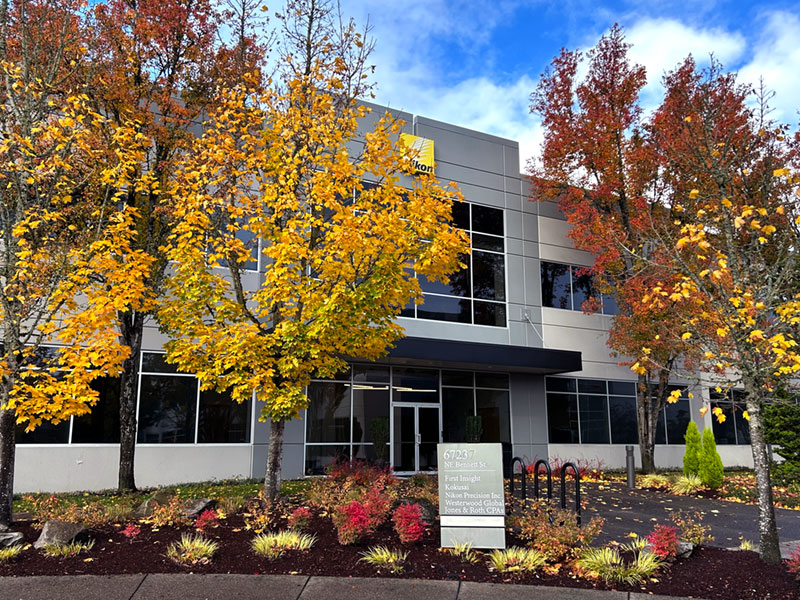
- 2024 – Hillsboro office relocates to a new home.
- 2024 – Robin Matthew retires
- 2025 – Evan Dickens transitions to Co-Managing Partner
- 2026 – 80 years of independent ownership and service.
Looking Forward
Since 1946, Jones & Roth has adapted to changing technology, evolving regulations, new industries, and new ways of working.
What has never changed is our commitment to relationships, integrity, curiosity, teamwork, and positive impact.
The tools may be different than they were in 1946.
The mission remains the same.


